
Where AI Is Reshaping Financial Services (FinTech AI Trends)
Details:-
An analysis of emerging AI use cases in fraud detection, underwriting, and customer experience, with insights on
regulatory considerations shaping adoption.
Executive Summary:
AI is no longer a future option for financial services—it’s a core capability reshaping how banks, insurers, and fintechs
detect fraud, assess risk, and serve customers. Organizations that deploy AI strategically are pulling ahead on speed,
accuracy, and customer satisfaction. Those that wait risk falling behind on both competitive performance and
regulatory readiness.
This guide gives leaders a realistic view of where AI is delivering measurable value in financial services today, what regulatory constraints are emerging, and how to deploy AI in ways that balance innovation with compliance and trust. The window for early-mover advantage is narrowing as regulators accelerate their oversight frameworks and customer expectations for personalized, real-time service continue to rise.
What’s Inside:
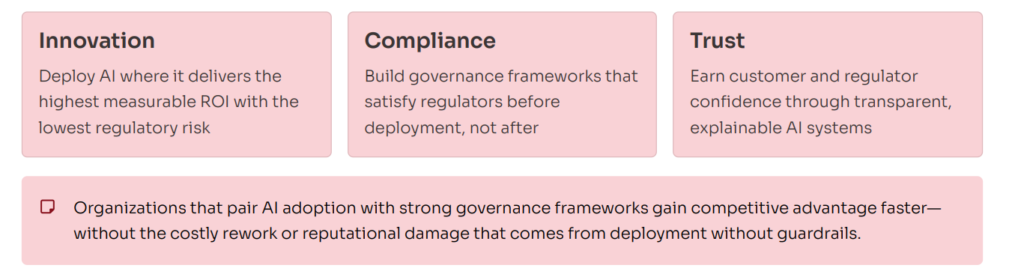
This guide covers five critical areas where AI is creating measurable impact in financial services today. Each section
addresses both the opportunity and the operational and regulatory considerations that leaders must navigate to deploy AI responsibly and effectively.
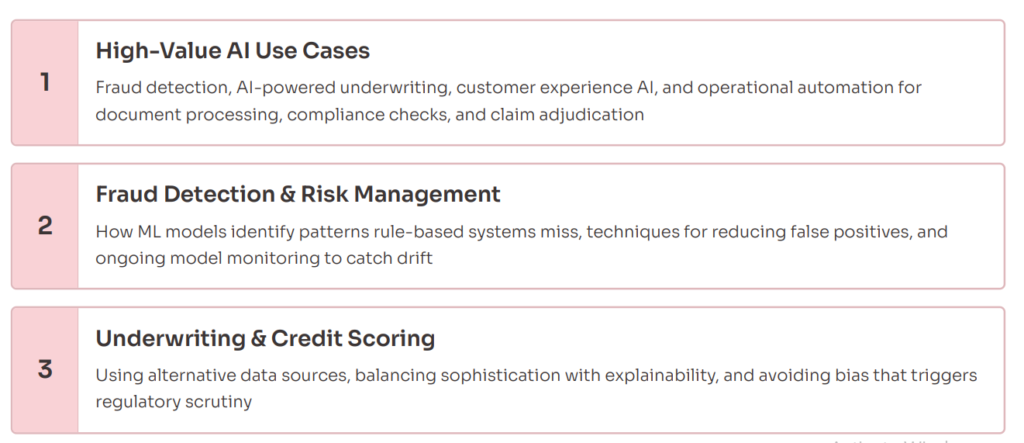
Section 1: High-Value AI Use Cases in Financial Services :
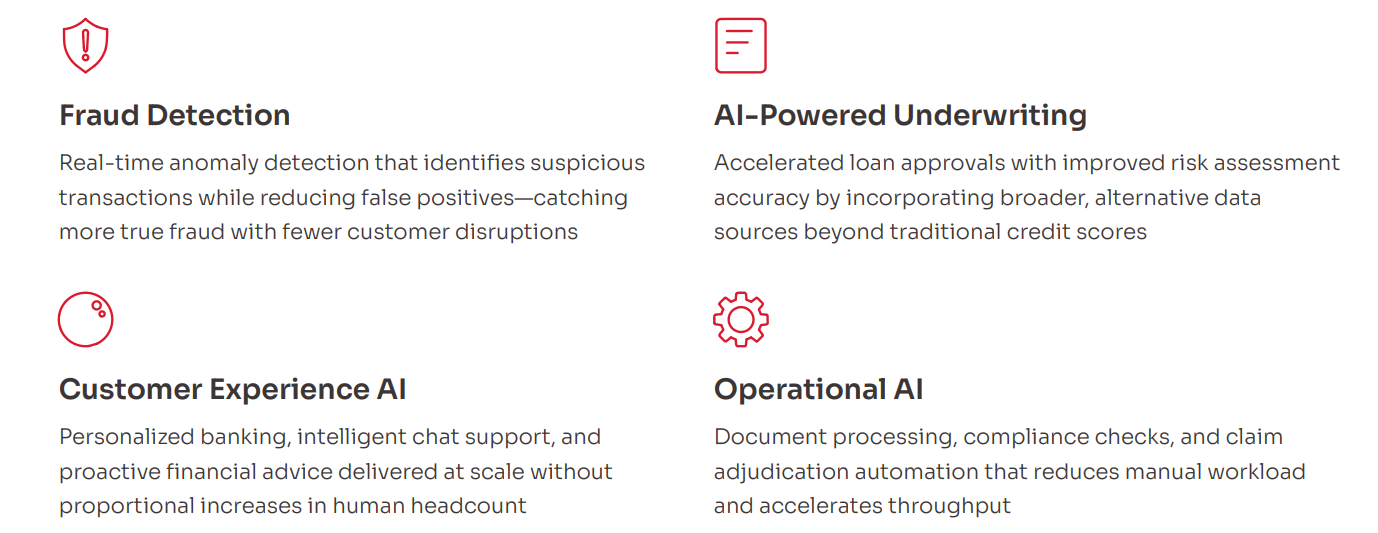
Financial institutions are moving from AI pilots to production deployments across four high-impact domains. The
common thread: AI systems that reduce manual workload, improve decision accuracy, and scale without proportional
headcount growth
Read More:
Traditional rule-based fraud systems were designed for a simpler era of financial transactions. They generate high false positive rates, frustrate customers, and miss sophisticated fraud patterns that machine learning models detect with far greater precision. ML models continuously learn from new transaction data, adapting to evolving fraud tactics in ways static rules cannot.
Leading institutions are achieving significant improvements in fraud detection rates while simultaneously reducing false positives—freeing compliance teams to focus on genuine threats rather than chasing alerts. The key differentiator is ongoing model monitoring to catch drift and maintain accuracy as fraud patterns evolve.